Table of Contents
A manager opens the training matrix and sees every box green. Later that morning, the manager watches an experienced employee start a routine task, then pause, unsure which step comes next. Effective health and safety training will build safer working practices and support legal duties, but only when people can apply it.
What health and safety competence really means
Training records have real value. They show what people have been taught and help you plan. But a record answers a different question from the one that matters on the shop floor: can this person do this task safely, here, today?
From completed courses to safe application
The HSE defines competence as a mix of training, skills, experience and knowledge, plus the ability to apply them safely to a task. Health and safety competence is therefore about what someone can do, not just what they have attended. Several factors shape it:
- Attitude: how willingly someone follows safe methods affects whether they work safely.
- Physical ability: consider the task’s demands alongside the individual’s capabilities, suitable equipment, task design and any adjustments needed to enable safe working.
- Proportion to the work: office duties and construction tasks need very different levels of capability.
- Evidence type: a certificate shows learning was recorded, not that the worker can perform the task safely in your workplace.
The same applies to a knowledge quiz. It can test understanding without showing how someone handles your equipment, loads, layout or procedures.
Task competence and the competent person role
Competence to carry out an assigned task differs from the appointed competent person role, which helps an employer meet its wider health and safety responsibilities. That advice can come from inside the organisation, from outside or from a combination suited to your size, risks and capability, as set out in the HSE explanation of competence.
Back to our manager: the green matrix and the hesitant employee give two different kinds of evidence. Neither means every task needs an external qualification or formal assessment. How you check capability should fit the task.
Identify what each task requires
Good training decisions start from the work itself, not from a course catalogue. Once you know what a task demands, you can see who is ready and who needs support.
Start with the work as it happens
A sound training needs analysis looks at the actual tasks, hazards, equipment, procedures and responsibilities involved. Employers should take existing competence into account when carrying out a risk assessment and deciding what information, instruction, training and supervision are needed. Different situations call for different capabilities:
- Routine work: the everyday method, done consistently.
- Maintenance: tasks such as clearing blockages or adjusting machinery, often with different hazards.
- Upsets and emergencies: foreseeable problems where people need to know when to stop and what to do.
Compare requirements with existing capability
Next, set each task’s required capability against the worker’s knowledge, experience and demonstrated ability. A new starter and a long-serving operator may need very different support for the same job.
Course records rarely show the whole picture. Incidents, near misses, inspections, worker feedback and difficulties you observe can reveal gaps that a completed course hides.
Keep the focus targeted. People need training relevant to their own hazards and responsibilities, not every course on offer.
Understand the applicable training duties
In Great Britain, section 2(2)(c) of the Health and Safety at Work etc. Act 1974 requires employers to provide the information, instruction, training and supervision needed to protect employees, so far as is reasonably practicable. This duty sits at the heart of health and safety training requirements in Great Britain.
Regulation 13 of the Management of Health and Safety at Work Regulations 1999 adds a duty to consider capabilities when assigning tasks. It also requires adequate instruction and training on recruitment and when new or increased risks arise.
Northern Ireland has corresponding duties under the Health and Safety at Work (Northern Ireland) Order 1978 and the Management of Health and Safety at Work Regulations (Northern Ireland) 2000. Salusphere Global helps organisations review these arrangements through its health and safety consultancy support, including identifying training gaps.
Check whether learning works on the job
Once training is delivered, the useful question is whether people use it. Proportionate checks give you that answer without turning every task into an exam.
Observe and discuss the actual task
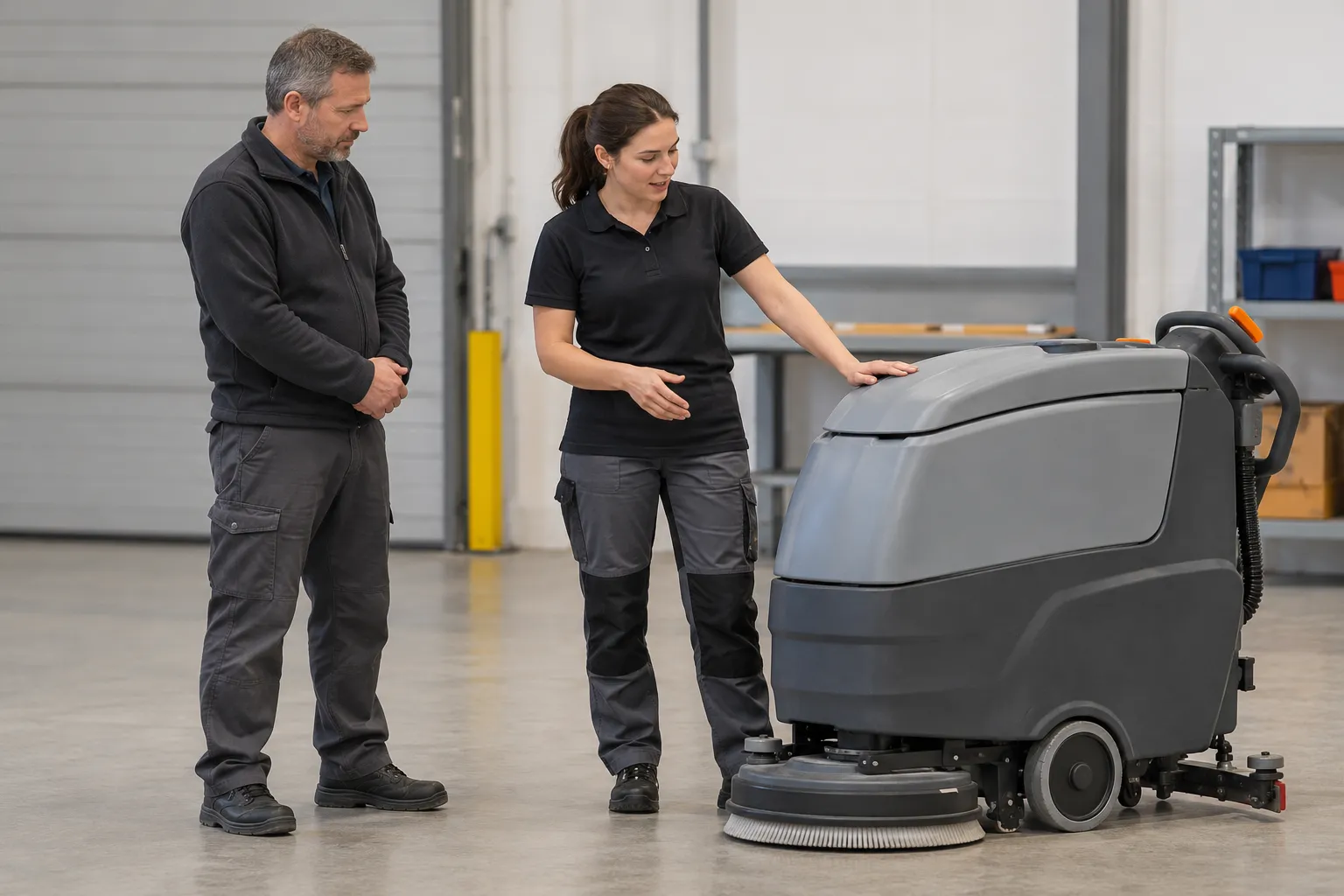
Where a task needs a practical check, assessing employee competence through observation or demonstration shows whether the person follows critical steps and uses the real equipment and precautions correctly. Questions and discussion then reveal whether they understand the hazards, the controls, what to do if conditions change and when to ask for help. For work equipment, regulation 9 of the Provision and Use of Work Equipment Regulations 1998 requires adequate training for users and those supervising them in Great Britain; Northern Ireland has a corresponding regulation 9 in its 1999 regulations.
Use practice to close gaps
Supervised practice lets employees apply learning before working alone and gives supervisors a chance to spot difficulties early. When a gap appears, respond with support rather than blame:
- Further instruction: revisit the steps that caused uncertainty.
- More practice: repeat the task under supervision until it is secure.
- Accessible delivery: use clear instruction, suitable language or accessibility adjustments, demonstrations and comprehension checks.
Where practical competence has not yet been established, provide supervision and any necessary restrictions appropriate to the risks. Allow independent work only when the employee can carry out the task safely.
When is health and safety training effective?
The HSE describes methods ranging from self-study and in-house demonstration to supervised practice or external courses, depending on the equipment, risks and existing competence, as set out in its guidance on work equipment training. Trainers need to be sufficiently skilled for the work involved. E-learning can build general safety knowledge and cover procedures, but an online module alone may not establish competence with equipment or other hands-on work.
The HSE’s five-stage approach ends by checking whether training worked. For health and safety training for employees, observed practice, practical results and worker feedback tell you far more than attendance.
Keep the matrix useful over time
A matrix earns its place when it reflects real capability. Built well, it becomes an index to your risk assessments, assessments and supervision arrangements rather than a substitute for them.
Record the evidence behind each status
A useful health and safety training matrix identifies the task and the capability it requires. It can then show training completed, any practical assessment and who carried it out. Supervision needs or restrictions sit beside the outcome rather than behind a certificate, which makes checking training effectiveness far easier.
Training completed, knowledge assessed, practical competence established and authorisation to work alone are separate decisions. A lift-truck operator may have finished training yet still need supervised practice with site-specific loads and pedestrian routes. This is recommended practice, not a prescribed legal form.
| Task | Training evidence | Practical check | Follow-up action |
| Lift-truck operation on site | Lift-truck course completed | Observed handling site-specific loads near pedestrian routes | Supervised practice before unrestricted operation |
| Using a new piece of work equipment | Earlier training on previous model | Demonstration using the new equipment | Additional instruction on changed controls |
Review competence when circumstances change
Changed tasks, equipment, technology or systems of work can create new training needs, even when older training is still on record. An incident, near miss or observed unsafe practice can also prompt a review of both competence and the conditions of the work. After a long gap from a safety-critical task, reassess before independent work resumes.
There is no single refresher interval for all health and safety training. Check any task-specific legal or accreditation requirements, alongside workplace risks and evidence of continuing competence. The HSE’s example of an employer-selected three-to-five-year lift-truck cycle is not a statutory deadline, and monitoring may show an earlier review is needed. Salusphere Global supports this kind of safety management through tailored classroom, virtual and eLearning training, helping you keep a safe workplace as things change.
Make safe working possible beyond training
Even well-trained people struggle when the job works against them. Training does its best work inside a system that makes the safe method the easy one.
Support the method taught
Training cannot replace eliminating or reducing risks through suitable equipment, task design and other controls. The HSE’s manual-handling guidance says training can raise awareness and reduce risk, but employers should first make handling operations as safe as reasonably practicable.
If people keep departing from the taught method, look at the conditions before booking another course. Check that these support the safe method:
- Procedures: workable in practice, not just on paper.
- Equipment: suitable and available when needed.
- Supervision and staffing: enough people to work as trained.
- Workload: realistic, so shortcuts are not the only way to keep up.
Repeating a course will not repair an unworkable procedure.
Look for outcomes, not promises
Good workplace safety training strengthens hazard recognition, safer working practices and emergency responses, which can help lower the risk of accidents. It cannot guarantee fewer workplace accidents or a set reduction in injuries.
A systematic review of 22 studies found strong evidence that training improves safety behaviour, but insufficient evidence that training alone reduces injuries or illness. A meta-analysis of 95 studies involving 20,991 people found practice, modelling and dialogue generally outperformed passive instruction.
Respond to what the workplace reveals
Training helps build a safety culture through shared understanding and reporting. Management behaviour, employee involvement and consistent controls shape that culture just as much.
Salusphere Global offers practical learning and a learning management system to assign courses and track progress, alongside reviews of workplace health and safety arrangements, training gaps and risk assessments. If your matrix looks complete but you want confidence it reflects real capability, discuss your training needs with us and how learning is applied at work.
Frequently Asked Questions
How does health and safety training help to reduce accidents?
Effective training strengthens hazard recognition, safer working practices and emergency responses. It cannot guarantee fewer accidents, and there is no defensible universal percentage reduction: outcomes depend on the risks, workplace controls and how training is applied.
Must health and safety training take place during working hours, and can employees be charged for it?
In Great Britain, regulation 13 of the Management of Health and Safety at Work Regulations 1999 requires the training it covers to take place during working hours. Employers must not charge employees for anything provided under a specific requirement of health and safety legislation (section 9 of the 1974 Act in Great Britain, article 10 of the 1978 Order in Northern Ireland).
Do young or inexperienced workers need extra support after their initial training?
They may. Young or inexperienced workers can need additional supervision after initial instruction, while they build the experience to apply what they have learned safely.