
Table of Contents
This guide walks HR leaders, managers and business owners through building a practical workplace mental health strategy, from legal foundations and risk assessment through to policy, training and cultural change, giving you a clear, actionable framework to protect your people and your organisation.
Why every organisation needs a mental health strategy
Mental health challenges are now one of the most significant operational risks facing UK employers. Too many organisations still rely on informal, case-by-case responses. That usually means action comes late, once stress, burnout, absence or conflict has already taken hold.
It helps embed mental health in the workplace into day-to-day management, supports health at work, and gives leaders a more reliable basis for decision-making. It also strengthens a wider wellbeing strategy by linking legal duty, culture, performance and practical employee well-being support.

The scale of workplace mental health challenges in the UK
The scale of the issue is hard to ignore. According to Mental Health UK’s 2024 Burnout Report, 91% of workers experienced high or extreme levels of pressure or stress in the previous year, while one in five needed time off because of poor mental health caused by pressure or stress. These are not edge cases. They affect a large part of the workforce and have a direct impact on health in the workplace.
Globally, around 12 billion working days are lost each year to depression and anxiety. Presenteeism adds another layer of cost, with reduced productivity often costing employers far more than absence alone.
The business case for investing in employee wellbeing
It affects retention, recruitment, attendance and performance. Organisations that take workplace mental health seriously are often better placed to attract and keep capable people, particularly where the labour market is tight.
There is also evidence that targeted support can make a difference. Investment in Mental Health First Aiders, for example, has been linked to healthier and more productive workplaces. But support works best when it sits within a broader workplace mental health strategy, rather than being treated as a standalone fix.
Working patterns matter too. Flexible and hybrid models can improve work-life balance, reduce stress and lower the risk of burnout when managed well. Research consistently shows that well-managed hybrid arrangements are associated with lower burnout, improved productivity and higher motivation among employees. For many employers, this makes flexible working an important part of any credible wellbeing strategy.
Key psychosocial risks that shape your strategy
Psychosocial risks are a major driver of poor mental health at work. If you want a practical strategy, start here. These risks sit at the point where work design, management behaviour and organisational culture meet. They should be considered as part of your broader approach to health in the workplace and assessed in the same disciplined way as other workplace risks.
- Excessive workload and long hours Sustained pressure without proper recovery time increases stress, undermines concentration and pushes people towards burnout.
- Lack of job control and unclear roles When people have little influence over their work, or face conflicting expectations, the risk to mental health in the workplace rises quickly.
- Bullying, harassment and discrimination Poor workplace relationships can cause serious harm, damage trust and create clear legal and operational risk.
Job insecurity, poor communication, inadequate pay and sensory overload for neurodivergent employees rarely appear in isolation; they tend to combine and intensify the effects. A sensible workplace mental health strategy should therefore address root causes, not just individual symptoms.
In practice, that means looking closely at how work is organised, how managers are supported, where training is needed, and whether your current systems genuinely support workplace mental health.
If your organisation needs a clearer approach to mental health in the workplace, Salusphere Global can help you review current arrangements, identify gaps and prioritise practical action. From workplace risk assessments and training to wellbeing needs assessments, neurodiversity inclusion and fractional senior support, we help employers build a more effective and realistic workplace mental health strategy.
How to Build and Implement a Workplace Mental Health Strategy
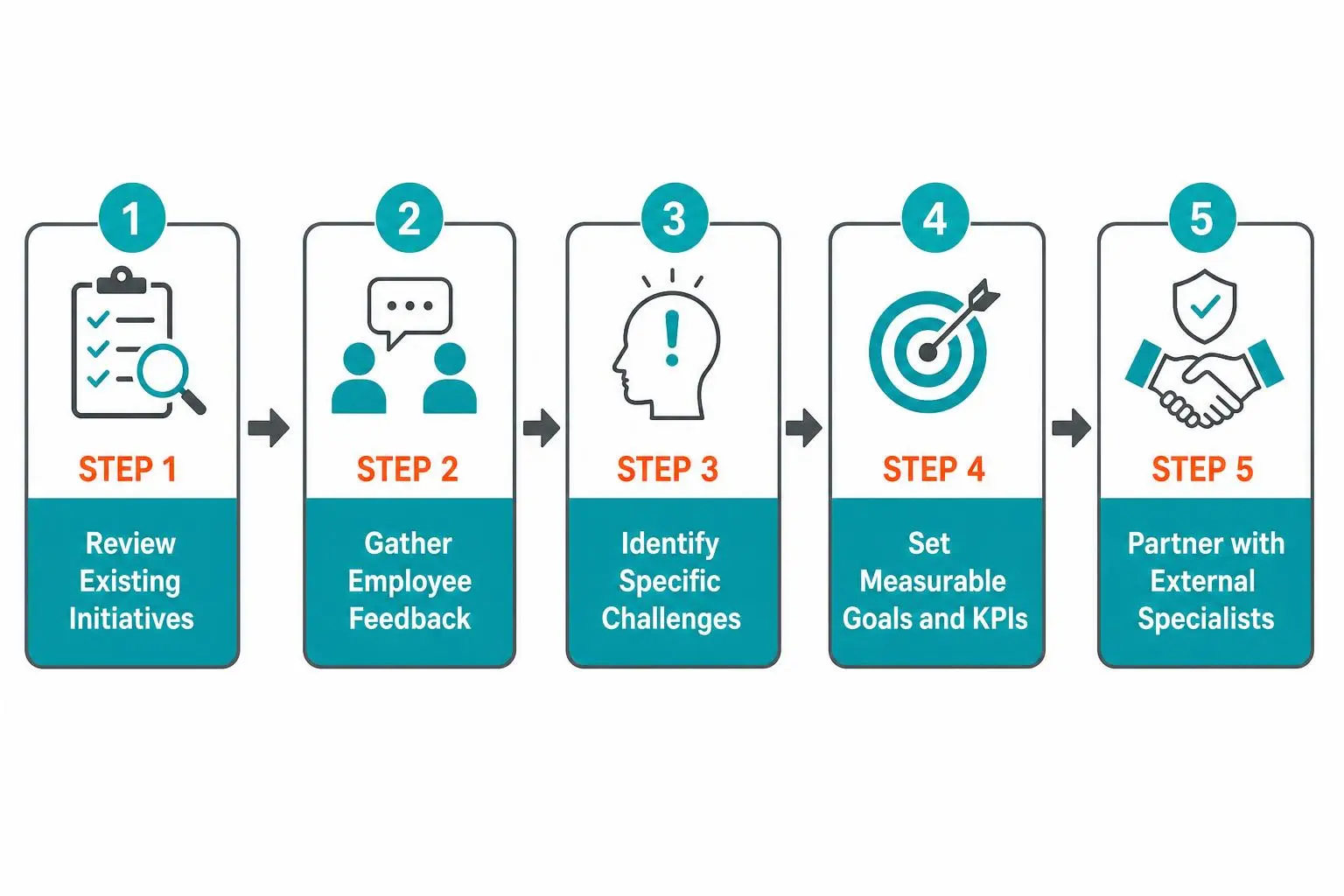
Building an effective workplace mental health strategy takes more than good intentions. It needs a clear, evidence-based process that reflects real working conditions, legal duties and the everyday pressures people face. The strongest approach starts with an honest view of your current position, meaningful employee feedback and measurable priorities before you commit to specific support, training or wider mental health initiatives.
Legal compliance and risk assessment as the foundation
If you want a credible approach to mental health at work, start with risk. In the UK, employers have duties under health and safety law to assess and manage risks to health at work, including risks linked to stress and other psychosocial hazards. A Stress Risk Assessment should sit at the centre of any serious plan for workplace mental health.
Done properly, it shows where pressure points sit across teams, where work design may be contributing to harm, and where your workplace wellbeing efforts need to focus. The UK government’s mental health action plan also makes clear that employers should take a structured approach to workplace mental health rather than relying on ad hoc activity.
- Compliance audit Review current arrangements against health and safety duties and the Equality Act 2010 to identify gaps and prioritise action.
- Multi-department stress risk assessments Assess teams and functions separately so you can see where psychosocial risks are most concentrated and what controls are needed.
- Data and gap analysis Use absence data, employee feedback and existing assessment findings to shape a strategy based on evidence, not assumption.
Without that evidence base, organisations can spend time and money on support that misses the real issues. A sound assessment process helps connect legal compliance, mental health and wellbeing and operational decision-making in a way that is practical and defensible.
Turning a workplace wellbeing policy into practical action
It sets expectations, defines responsibilities and signals that workplace wellbeing and mental health at work are taken seriously. But a policy on its own will not change day-to-day behaviour or improve workplace culture.
That is where Wellbeing Action Plans can help. They give employees and managers a simple framework to discuss individual stressors, early warning signs, helpful adjustments and the kind of support that works in practice. Used well, they make conversations about workplace mental health more routine and less reactive.
They can be introduced during onboarding, one-to-ones, performance reviews, return-to-work meetings and periods of organisational change. This helps create a more consistent approach to mental health and wellbeing across the employee lifecycle. It also supports managers, who often want to help but need structure, confidence and the right training to do it well.
Choosing the right support model for your organisation
Not every organisation has the time, internal capability or specialist knowledge to build and maintain a strong workplace mental health strategy alone. For many SMEs and growing organisations, external support is a sensible way to review current arrangements, prioritise improvements and strengthen both workplace wellbeing and compliance.
A good starting point is a workplace wellbeing audit. This can help you understand where your workplace wellbeing policy, manager capability, risk controls and existing mental health initiatives are working well, and where they need attention.
External support can be structured in different ways depending on the size, maturity and specific gaps in your organisation. The table below outlines a typical range of options.
| Package | Annual support days | Key inclusions | Best suited to |
| Essential | 1–2 days | Compliance audit, Stress Risk Assessment review, action planning | SMEs starting to build a workplace mental health strategy |
| Intermediate | 3–5 days | Engagement surveys, policy development, internal awareness webinars, peer support setup | Growing organisations developing a more structured approach to workplace wellbeing |
| Comprehensive | 8–10 days | Full Stress Risk Assessment audit and report, business psychology data review, monthly training sessions, neurodiversity support, awareness webinars | Complex organisations needing ongoing strategic support for workplace mental health and workplace culture |
What employers should focus on next
Surveys, workshops and regular feedback help you test whether your plans reflect real experience on the ground.
In practice, a sensible approach usually includes a current-state review, a Stress Risk Assessment, a clear workplace wellbeing policy, manager training, realistic actions for improving workplace culture and a way to measure progress over time. That is how organisations move from good intentions to a workable, evidence-led approach to mental health at work.
If you are reviewing your current approach to workplace mental health, Salusphere Global can help you identify gaps, prioritise action and build a practical roadmap that fits your organisation. Speak to the team about a wellbeing needs assessment, audit, training or fractional support to strengthen your approach to mental health and wellbeing.
Sustaining a culture of mental health support at work
Building a strategy is only the start. Sustaining workplace mental health requires steady leadership, practical training, regular review and a live, workable model that integrates mental health into day-to-day decisions, management practice and workplace culture, keeping pace with changing risks, workforce needs and operational pressure.
Manager training and psychological safety as culture drivers
Managers shape the everyday experience of workplace mental health more than any policy document ever will. If they are not confident dealing with sensitive conversations, spotting concerns or responding well under pressure, mental health support can remain theoretical rather than practical.
That is why training matters. Managers need the skills to recognise distress, respond calmly, support disclosure without judgement and understand when to signpost someone to further health support. This is central to embedding mental health, strengthening resilience and creating a culture of mental health that people can trust.
- Recognising early warning signs Managers who notice changes in behaviour, attendance or performance can act earlier and reduce the risk of problems escalating into prolonged stress, crisis or absence.
- Open communication and active listening Clear, empathetic conversations make mental health support easier to access and help reduce the stigma that still affects employee mental health in many workplaces.
- Psychological safety in teams When managers respond with curiosity rather than blame, people are more likely to speak up about pressure, mistakes, workload and mental health at work.
- Signposting to appropriate support Managers are not therapists, but they should know what mental health initiatives, internal routes and external support are available.
It grows through consistent behaviour, fair decision-making and visible leadership. Mental health first aid training can strengthen that support by creating a network of trained colleagues who complement line managers and widen access to health support across the organisation.
Shared responsibilities across employers, managers and individuals
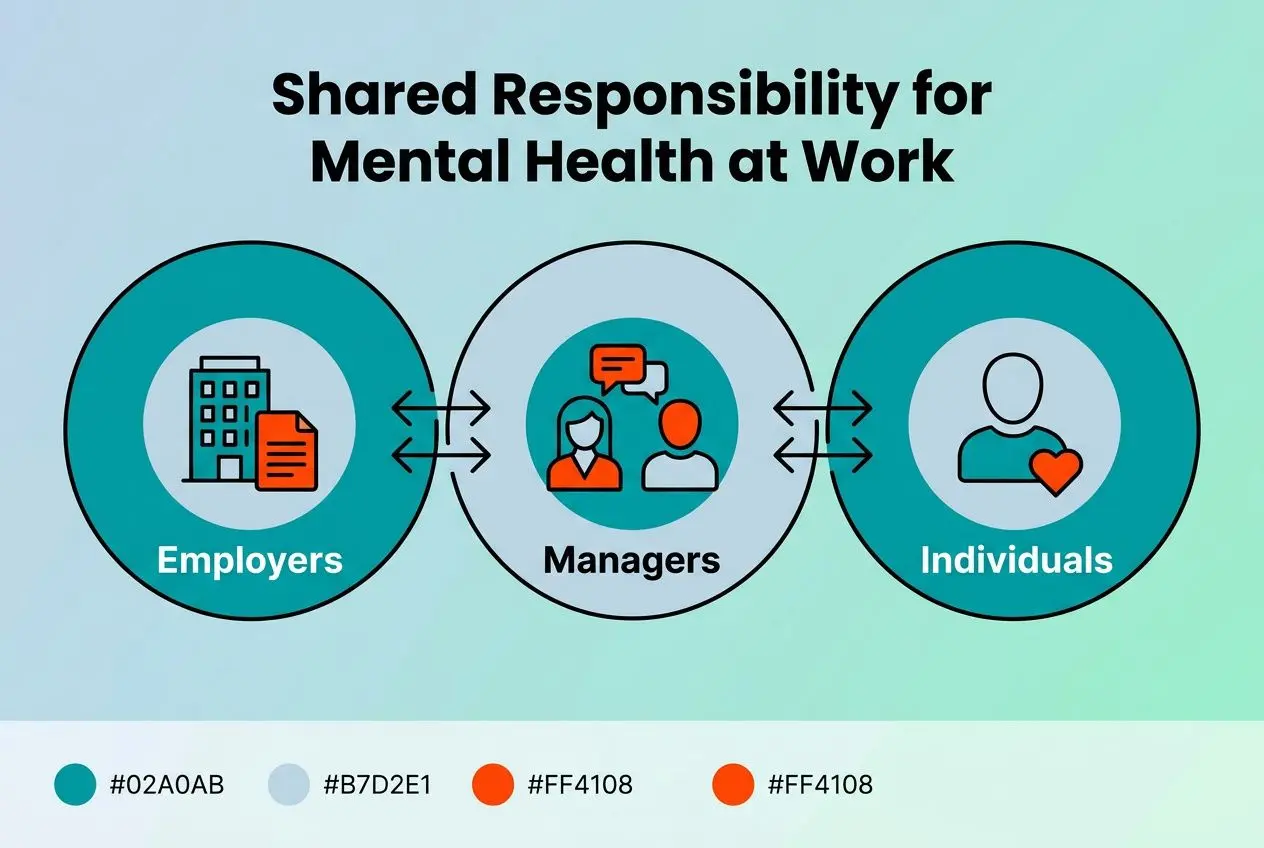
Sustaining good mental health at work is a shared responsibility. HR cannot carry it alone, and neither can individual managers. The mental health framework from ACAS sets this out clearly: employers, managers and individuals all have a role in supporting workplace wellbeing, embedding mental health strategies and reducing work-related harm.
For employers, this means embedding mental health strategies within a wider wellbeing strategy, addressing workload, role clarity, working patterns and other drivers of stress, and ensuring policies are matched by action. It also means prioritising employee mental health in a way that links legal duty, operational performance and human impact. A strong approach, for example, links absence patterns to workload management, connects line manager training to both legal duty and operational performance, and treats work-life balance as a business risk rather than a standalone HR initiative.
It should also include reasonable adjustments and inclusive design for neurodivergent employees. Around 1 in 7 people in the UK are neurodivergent, and poor workplace fit can significantly affect mental health, wellbeing and performance. Neurodiversity training can help organisations build a more inclusive workplace culture, with practical adjustments, clearer communication and more accessible mental health strategies.
Individuals have a part to play too. People need to be encouraged to recognise pressure early, use available mental health support, raise concerns before issues become entrenched and make sensible use of strategies for mental health that support resilience and work-life balance. That is far more realistic when the organisation has already done the work of integrating mental health into normal business practice.
Measuring and evolving your mental health strategy over time
A workplace mental health strategy needs evidence behind it. Without measurement, organisations cannot tell whether their mental health initiatives are improving employee mental health, reducing stress or supporting a healthier workplace culture.
Useful review measures might include:
- Employee engagement surveys Anonymous feedback helps organisations understand whether wellbeing initiatives are landing well and where workplace mental health risks may be building.
- Absence and presenteeism data Looking at patterns over time can show whether mental health strategies are helping reduce lost time and improve health at work.
- Pulse checks and wellbeing measures Short, regular reviews can track stress, resilience and confidence in available mental health support.
- Training uptake and awareness Monitoring participation shows whether training, wellness initiatives and support routes are visible, understood and reaching the right people.
The most effective organisations review what the data says, test practical changes and keep refining their approach. That may include scheduled awareness activity, manager refreshers, targeted support for high-pressure teams and a clearer link between workplace wellbeing and wider business planning.
If your organisation is reviewing its approach to workplace mental health, strengthening training, or embedding mental health strategies more effectively, Salusphere Global can help you identify gaps, prioritise action and improve your systems. Speak to us about a workplace wellbeing needs assessment, mental health initiatives, leadership support or fractional senior support tailored to your organisation.
Frequently asked questions
What should a workplace mental health strategy include?
A strong workplace mental health strategy should set out a clear, practical approach to mental health across the organisation. In most cases, that means a Stress Risk Assessment, a mental health policy, Wellbeing Action Plans, manager training, and accessible mental health support for employees. It should also include peer-led support where appropriate, such as Mental Health First Aiders, alongside a structured me of awareness activity that supports workplace wellbeing without becoming tokenistic.
A good workplace wellbeing strategy should go further than awareness days. It should cover neurodiversity inclusion, reasonable adjustments under the Equality Act 2010, measurable objectives, employee engagement feedback, and regular review points. The aim is to build a workable wellbeing strategy that supports workplace mental health, strengthens employee engagement, and helps embed mental health into day-to-day management decisions.
Is a stress risk assessment a legal requirement for UK employers?
Yes. Under the Health and Safety at Work etc. Act 1974 and the Management of Health and Safety at Work Regulations 1999, employers must assess and manage risks to health and safety, including stress and other psychological risks that affect workplace mental health. In practice, that means organisations should assess work-related stress as part of their wider workplace risk assessment process.
A Stress Risk Assessment is not simply a nice-to-have. It forms part of a sensible approach to mental health and wellbeing governance. If this has been overlooked, it can leave an organisation open to enforcement action, employee relations issues, and reputational damage. A review of your current workplace mental health strategy can help identify gaps, prioritise action, and strengthen your workplace mental health approach.
How can managers improve mental health support for their teams?
Managers play a central role in workplace mental health. They can improve mental health support by completing relevant training, holding regular one-to-one conversations, spotting early signs of stress, and knowing how to direct people towards appropriate support.
The most effective organisations make mental health and wellbeing part of normal management practice rather than something discussed only when problems escalate. Clear processes, practical support, and confidence in handling sensitive conversations all help managers create a healthier workplace.
If you are reviewing your workplace wellbeing strategy or need help strengthening your workplace mental health strategy, Salusphere Global can support you with training, workplace wellbeing assessments, neurodiversity inclusion advice, and a practical review of your current approach to mental health.