Table of Contents
Understanding
mental health in the workplace is essential for every employer. It affects people, performance and organisational resilience. This guide explains what mental health at work means in practice, why poor mental health at work creates legal and commercial risk, and what sensible steps employers can take to support staff. Understanding mental health in the workplace helps employers reduce risk, support people earlier and build healthier working environments. This guide explains what mental health at work means in practice, the role of work-related stress, employer duties and sensible steps managers can take before concerns escalate.
What is mental health in the workplace
Mental health in the workplace is about how people think, feel and function at work. It shapes concentration, decision-making, relationships, attendance and performance. Good mental wellbeing helps staff cope with pressure, contribute effectively and recover from setbacks. When workplace factors are poorly managed, the risk of mental health problems rises.
Many people will experience stress, depression, burnout or other mental health conditions at some point in their working lives.

Stress, burnout and mental health conditions at work
It is important to separate, but not oversimplify, different issues.
Work-related stress is not the same as a diagnosable illness, yet prolonged stress can contribute to poor mental health at work and make existing mental health conditions worse.
- Work-related stress is the reaction people have when demands and pressures exceed their ability to cope.
- Mental health conditions include illnesses such as anxiety and depression. These may be caused by a mix of personal, social and workplace factors.
- Burnout is a state of physical and emotional exhaustion linked to prolonged stress, often accompanied by reduced effectiveness and detachment from work.
In real workplaces, these issues often overlap. A member of staff under sustained pressure may start with stress symptoms, then develop wider mental health problems if nothing changes. It also explains why employers need to look at both individual needs and the working environment. Organisations seeking practical help can explore
workplace mental health support to review current arrangements and identify where action is needed.
The scale of poor mental health at work in the UK
HSE’s latest 2024/25 overview gives
964,000 workers suffering from work-related stress, depression or anxiety, and HSE’s days-lost data says stress, depression or anxiety accounted for
22.1 million working days lost in 2024/25.
The cost is not limited to absence. Presenteeism, where staff are at work but not functioning at their best, carries a major commercial burden. Many employers also see hidden effects: mistakes, strained teams, reduced customer service, higher turnover and managers spending more time dealing with issues that could have been prevented earlier.
| Metric |
Figure |
| Workers affected by work-related stress, depression or anxiety |
964,000 |
| Working days lost due to work-related stress, depression or anxiety |
22.1 million |
| Average days lost per case |
22.9 days |
Psychosocial risk factors in mental health in the workplace
If you want to improve
workplace mental health, start with the causes of harm. Psychosocial
risk factors are features of work design, management and culture that can increase the likelihood of
mental health problems,
stress and other forms of work-related ill health.
- Excessive workload and unclear responsibilities can create constant pressure and confusion.
- Low job control can leave staff feeling powerless over how their work is done.
- Poor management can undermine trust, confidence and access to support.
- Bullying, harassment and discrimination can damage mental wellbeing and expose the employer to serious people, legal and reputational issues.
They affect absence, retention, engagement and safety. They can also make reasonable adjustments harder to deliver for people with existing mental health conditions.
Useful guidance is available through the HSE’s resources on
workplace mental health. For most organisations, the key is to assess where work-related stress is coming from, review whether managers are equipped to respond, and put proportionate controls in place.
What employers should do next
A sensible response to
mental health in the workplace is grounded in how work is actually designed and managed, not in surface-level initiatives. Check where pressure points sit, whether staff feel able to speak up, and whether managers understand how to respond to poor mental health at work before issues escalate into absence, conflict or burnout.
That may include reviewing policies, carrying out a workplace risk assessment, strengthening manager capability, improving support routes and addressing patterns of discrimination or harmful working practices. If you need an external view, Salusphere Global can help you assess gaps, prioritise action and build a more effective approach to mental health in the workplace through workplace wellbeing needs assessments, training and fractional senior support.
Employer legal duties and mental health at work
Many employers are still unclear about what the law actually requires on
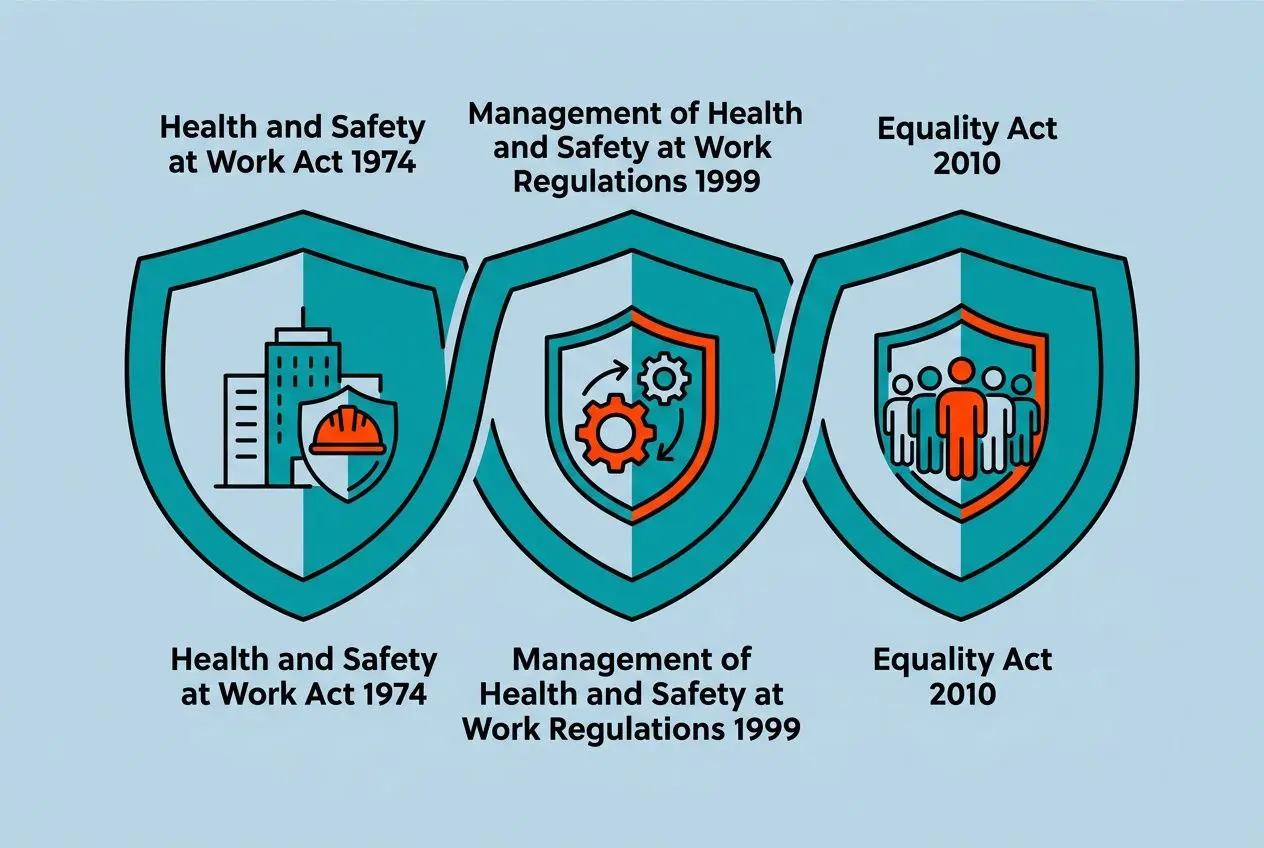
mental health at work. The position is more straightforward than many assume. UK law expects every employer to manage work-related risks that may affect mental health in the same practical, systematic way as any other workplace
risk. When that does not happen, the consequences can be legal, operational and human.
Reasonable adjustments in practice
An employer’s
duty of care goes beyond having a policy on paper. Once concerns are known, or ought reasonably to have been identified, the organisation should consider what practical steps may help.
In practice,
reasonable adjustments for
mental health may include:
- Flexible working hours – adjusted start or finish times to help someone manage fatigue or commuting pressure.
- Workload changes – temporarily reducing, redistributing or reprioritising work where pressure is contributing to stress.
- Regular check-ins – structured one-to-ones that provide consistent support, clarity and early identification of problems.
The best arrangements are agreed with the individual, recorded clearly and reviewed over time. Many are simple and low cost. What often causes difficulty is delay, poor communication or inconsistent decision-making, which can increase both people risk and the risk of
discrimination complaints.
How to support mental health and build a healthier workplace
Legal compliance is only the starting point. For any employer, the bigger question is how to build a supportive workplace where staff can do their jobs well, raise concerns early and access the right support before problems escalate.
It affects retention, absence, productivity, morale and day-to-day workplace culture. It also helps organisations manage risk in a practical way, especially where stress, change, workload and poor management are already affecting mental health at work.
Recognising the signs of poor mental health at work
Effective workplace wellbeing support starts with noticing what is changing. The signs of poor mental health at work are not always dramatic. More often, they appear gradually and can be mistaken for pressure, tiredness or a temporary dip in performance.
- Behavioural changes such as increased absence, lateness, withdrawal from colleagues or unusually long working hours.
- Emotional indicators including irritability, tearfulness, lower confidence or a visible drop in motivation.
- Cognitive signs such as difficulty concentrating, missed deadlines, reduced quality of work or feeling overwhelmed by routine tasks.
- Physical signs including fatigue, headaches, poor sleep or visible anxiety in everyday interactions.
Timely, calm conversations are far more useful than waiting until mental health problems lead to formal absence, conflict or crisis. Managers do not need to mental health conditions. They need to notice, listen and respond appropriately.
The role of managers in early intervention and support
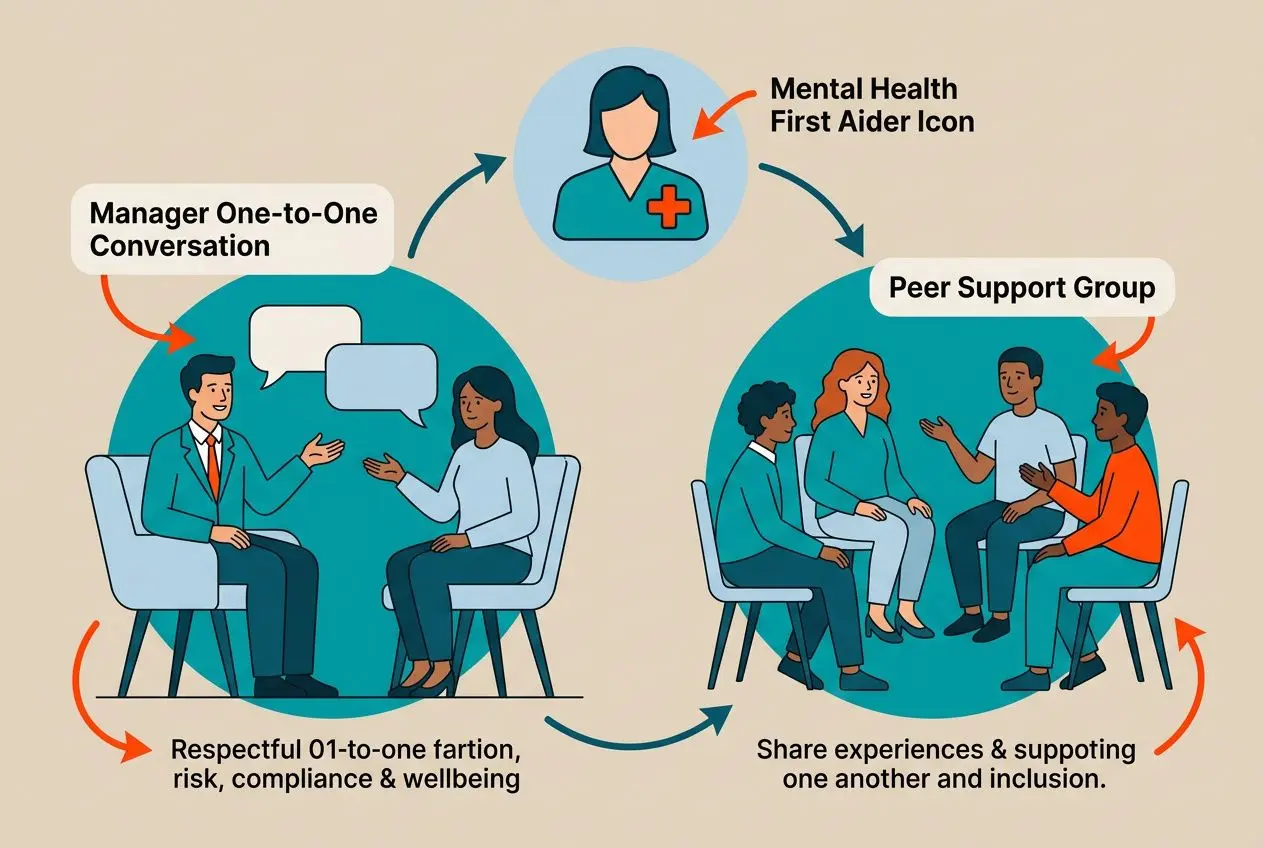
Managers are central to mental health support. In most organisations, they are the people most likely to spot changes in behaviour, workload strain and work-related mental health concerns first. That puts them in a key position to reduce mental health risks through regular contact, sensible adjustments and clear communication.
Practical steps matter. Regular one-to-ones, realistic workloads, clear expectations and honest communication during change all help support mental health and reduce stress.
A trained
mental health first aider can add another layer of support, particularly for colleagues who may not want to approach their line manager straight away.
Mental health first aid training helps designated staff recognise distress, start supportive conversations and signpost people towards appropriate health support.
Building a workplace culture that supports mental health
If staff fear stigma, judgement or damage to their career, mental health issues often stay hidden until the impact is harder to manage.
That is why employers can support mental health most effectively by creating a supportive workplace where leaders model openness, managers respond consistently and people know what mental health support is available. Ongoing conversation, visible leadership and clear routes to support are what make the difference.
Strong workplace wellbeing often includes practical measures such as peer support, manager training, engagement surveys, wellbeing plans and access to specialist learning. For some teams,
suicide first aid training may also be an appropriate part of a broader mental health and wellbeing approach.
Frequently asked questions
Do I have to disclose my mental health condition to my employer?
No. Staff are not legally required to tell an employer about mental health conditions. That said, disclosure may be necessary if you need reasonable adjustments or other health support to do your role safely and well. An employer should treat that information confidentially and must not use it in a way that leads to discrimination. In practice, some people choose to speak first with a trusted manager, HR contact or a mental health first aider before deciding what formal support they want.
What are the main causes of poor mental health in the workplace?
Common causes include excessive workloads, poor line management, low control over work, unclear expectations, job insecurity, bullying, harassment and discrimination. Strained working relationships and poorly managed change can also increase stress and harm workplace mental health. These are psychosocial risk factors, and employers should assess the level of risk and take sensible action to reduce it. A stress risk assessment is often a practical starting point for understanding what is driving poor mental health at work in your organisation.
What practical steps can employers take to support staff mental health?
That may include a stress risk assessment, a workplace wellbeing needs assessment and a review of current mental health in the workplace arrangements. Employers can then train managers to have effective conversations, appoint a trained mental health first aider, put clear mental health support in place, and offer reasonable adjustments where needed. Good support also includes clear routes to health support, peer support, and regular review of what staff are experiencing. If you want to review your current approach to mental health at work, Salusphere Global can help you identify gaps, prioritise action and strengthen support.