

Table of Contents
- Legal duty to make reasonable adjustments for autistic employees
- Sensory and environmental reasonable adjustments at work
- Communication and organisation adjustments for autistic staff
- Assessing what counts as a reasonable adjustment
- Building an inclusive culture beyond individual adjustments
- Frequently asked questions
This article explains what workplace adjustments for autistic employees UK employers are legally required to make, how to assess reasonableness, and what practical steps to take, giving you aa practical framework to help employers understand their duties, reduce risk and support genuine inclusion.
Legal duty to make reasonable adjustments for autistic employees
Under the Equality Act 2010, employers have a legal duty to make reasonable adjustments where a worker meets the definition of disability and is placed at a substantial disadvantage. For many autistic people, that duty may apply in practice even before any formal label or paperwork is discussed. What matters is whether the employer knows, or could reasonably be expected to know, that someone is facing barriers in the workplace.
That is why managers, HR teams and business owners need to understand both the legal test and the practical response. You can explore autism support resources and specialist partners that inform our approach to workplace inclusion. We also offer a free practical guide covering key autistic workplace adjustments employers can implement without delay.
The duty is fact-specific, so employers should avoid making assumptions and should take reasonable steps to understand the barrier and the support needed.

When does the duty to make adjustments arise?
The duty to consider workplace adjustments for autistic employees UK employers may need to provide usually arises where three points are present. A person does not have to describe themselves as disabled for the duty under the Equality Act 2010 to become relevant. If an employer is aware of difficulties linked to a potential disability, it should consider whether reasonable adjustments are needed.
- Disability definition met The individual has a physical or mental impairment with a substantial and long-term adverse effect on normal day-to-day activities, lasting or expected to last at least 12 months.
- Employer awareness The employer knows, or could reasonably be expected to know, about the disability through disclosure, observed difficulties, or concerns linked to health-related barriers.
- Substantial disadvantage The person is placed at a meaningful disadvantage compared with non-disabled colleagues in the workplace, not just a minor inconvenience.
If those conditions are met and an employer fails to act, that can amount to unlawful discrimination arising from a failure to provide reasonable adjustments.
What counts as reasonable adjustments under the law?
The Equality Act 2010 recognises three broad types of adjustments: changing policies or ways of working, altering physical features, and providing auxiliary aids or services. In practice, adjustments at work for an autistic employee might include changes to communication, flexibility around routines, support with transitions, or steps to reduce sensory overload in an office environment.
These duties run through the full employment cycle, including recruitment, job trials, apprenticeships and ongoing work.
Does an autistic employee need a formal diagnosis?
No. An autistic employee does not need a formal diagnosis before an employer considers adjustments at work. Many autistic adults face long waiting times for assessment, while others may choose not to pursue diagnosis at all. Delaying support until paperwork appears can create unnecessary risk and leave obvious barriers unaddressed.
The better approach is to focus on impact. If someone explains that certain tasks, environments or ways of working are causing difficulty, the employer should explore what practical adjustments may help. That may include reviewing workload expectations, meeting formats, shift patterns or how structured routines are managed day to day.
Listen carefully, keep medical questions proportionate, and agree how information will be shared. For autistic people, effective autism support is often less about complex intervention and more about timely, practical workplace adjustments for autistic employees that remove predictable disadvantages.
If your organisation wants to review its current approach to reasonable adjustments, assess gaps in manager capability, or strengthen its approach to neurodiversity inclusion, Salusphere Global can help you prioritise action, improve systems and reduce risk through practical advice, training and fractional support.
Sensory and environmental reasonable adjustments at work
The physical environment of a typical workplace can create real barriers for autistic people. For many, sensory differences are a core part of being neurodivergent, so the way a space sounds, feels and functions can directly affect wellbeing, concentration and attendance. Getting these adjustments at work right is often one of the most practical and cost-effective steps an employer can take.
How sensory overload affects an autistic employee at work
One of the most important areas to review in reasonable adjustments autism planning is sensory processing. A busy office with constant conversations, bright lighting and unpredictable noise can be exhausting for an autistic employee. If this is ignored, it can affect performance, increase stress and contribute to burnout.
- Noise sensitivity Background noise, phones ringing and several conversations at once can create cognitive overload, making it harder for workers to concentrate and complete tasks accurately.
- Lighting sensitivity Harsh fluorescent lights, glare and bright screens can cause discomfort, headaches and fatigue over the course of the working day.
- Unpredictable layout Hot-desking can add unnecessary pressure by removing routine and certainty about where someone will be working.
They can have a direct impact on whether someone can work safely, comfortably and consistently. In practice, reasonable adjustments such as quieter spaces, clearer routines and more control over the immediate environment often make a measurable difference.
Practical environmental adjustments for autistic staff
Improving the sensory environment workplace does not usually require major refurbishment. Many effective adjustments are simple changes to layout, equipment or day-to-day arrangements.
- Fixed workstations A consistent desk or base can reduce stress and help autistic people settle into their tasks more quickly.
- Quiet spaces Access to a low-stimulus room or private area can support focus, recovery and emotional regulation during the day.
- Headphones or ear defenders Allowing tools that reduce sensory input can help people manage noise without affecting team output.
- Flexible working hours Adjusting working hours can help someone avoid peak travel times or busier periods in the office, reducing avoidable sensory strain.
- Remote or hybrid working Where the role allows, flexible arrangements can give individuals more control over their space and support more effective working.
Good reasonable adjustments at work are rarely about special. They are about removing avoidable obstacles so people can do their job well. For employers, that means fewer preventable problems, better retention and a more inclusive workplace.
Communication and organisation adjustments for autistic staff
Differences in social communication are a recognised part of autism, yet many of the barriers autistic adults face in the workplace come from the way work is organised rather than from ability. In practice, problems often arise when an autistic employee is expected to interpret vague language, shifting priorities or unwritten rules without enough clarity.
Using clear language as a reasonable adjustment
One of the simplest communication adjustments autistic employees may need is clear, direct language. Jargon, sarcasm, idioms and implied meanings can create confusion, especially for people who process language more literally.
Simple changes help. Give written instructions, set out expectations clearly and explain tasks in specific terms. This supports performance, reduces misunderstandings and often improves communication across the wider team as well.
Structured support for organisation and workload
Some of the most effective workplace adjustments are those that improve structure and predictability. Many autistic people work best when priorities are clear, deadlines are visible and changes are communicated in good time. This is a practical issue, not a personal failing, and it can affect confidence, wellbeing and long-term employment.
Useful examples include visual planners, task lists, advance meeting agendas and agreed check-in points with a manager. These measures can make it easier for autistic adults to organise work, prepare properly and manage competing demands.
Regular feedback also matters.
Reducing stress caused by avoidable change
Last-minute changes to schedules, meetings or working arrangements can create unnecessary pressure. Where possible, employers should give notice of change and explain what is happening, when and why. When change cannot be avoided, clear instructions and realistic timescales can reduce uncertainty.
Written records and practical tools
Written summaries after meetings can be very helpful. They give an autistic employee something accurate to refer back to, reducing reliance on memory and helping with follow-through on tasks. Depending on the individual, assistive tools such as speech-to-text software, screen readers, coloured backgrounds or extra reading time may also help.
Making it easier to ask for support
Employers should also have a clear process so staff can request support without unnecessary difficulty. If that route is unclear, people may stay silent even when straightforward workplace adjustments could make a significant difference.
A practical review of workplace adjustments for autistic employees, line manager capability and day-to-day systems can help identify gaps and improve outcomes for both the individual and the business.
If your organisation wants to strengthen its approach to neurodiversity, Salusphere Global can help you review current arrangements, improve communication practices and prioritise sensible, workable support for autistic people in the workplace.
Assessing what counts as a reasonable adjustment
Not every change an employee asks for will count as reasonable in law. Even so, the legal threshold is often lower than employers expect. In practice, many autism-related adjustments are straightforward, practical and well within what a tribunal is likely to view as reasonable.
Factors that determine whether adjustments are reasonable
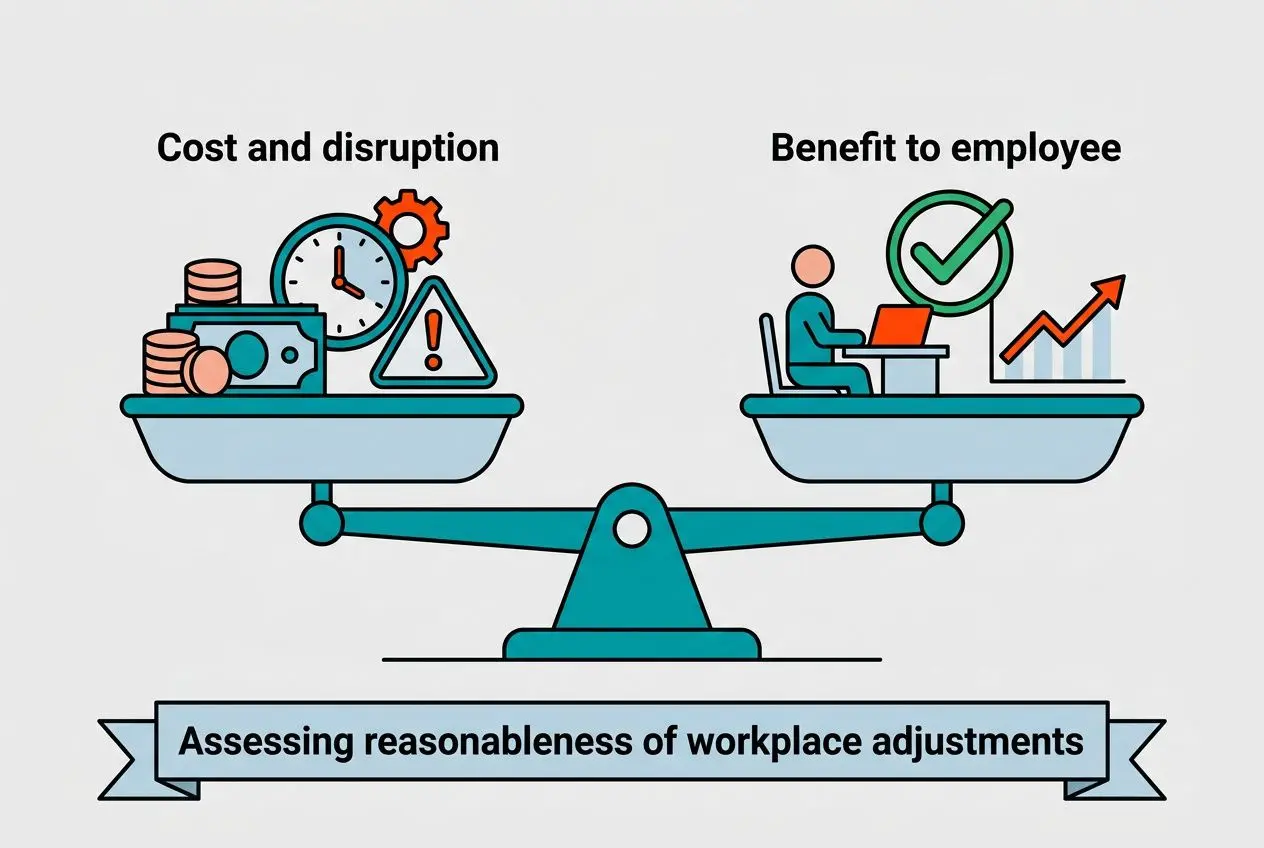
When considering what reasonable adjustments cost employers, the law expects an objective, case-by-case judgement. The key questions are whether the adjustment would actually reduce the disadvantage, whether it is practical, what impact it may have on the business, and whether there are any genuine health and safety concerns. The size and resources of the organisation also matter.
What matters is whether the employer took the request seriously, looked at the role, the working arrangements and the wider environment, and made proportionate decisions.
Many common adjustments at work cost little or nothing. Written summaries after meetings, a fixed workstation, changes to communication methods, mentoring, or more flexible working hours can often make a substantial difference without major disruption.
| Adjustment type | Typical cost | Reasonableness likelihood |
| Written meeting summaries | None | Very high |
| Fixed workstation allocation | None / minimal | Very high |
| Flexible working hours | Operational impact | High (case dependent) |
| Noise-cancelling headphones | Low to moderate | Very high |
| Workplace mentor assignment | None | Very high |
| Assistive technology software | Low to moderate | High; Access to Work may contribute, depending on eligibility and circumstances. |
For SMEs, reasonable adjustments at work do not have to mirror the scale sometimes seen in larger businesses. The law recognises differences in resources. What is expected is sensible action that helps remove disadvantage in the actual workplace, backed by clear records and sound judgement.
Can an employer refuse a requested adjustment?
Yes, but only where the requested adjustment is not reasonable in the circumstances, or where another effective adjustment can address the same disadvantage. Employers should be able to explain why the change would not work, would create disproportionate operational difficulty, or would fail to address the relevant disadvantage.
Before refusing on cost grounds, it is sensible to check whether Access to Work could help fund the adjustment. If external funding is available, it may be harder to justify saying no.
If a request is declined, the reasoning should be recorded in writing.
Access to Work and external funding for adjustments
Access to Work is a UK government grant for employees, apprentices and self-employed people with a disability or health condition. It can contribute towards equipment, software, assessments and other practical measures that support someone in working effectively.
In more complex cases, a workplace needs assessment can be useful. It helps identify the specific barriers affecting the individual, looks at the physical and procedural environment, and recommends proportionate adjustments. It can also strengthen the record behind decisions about reasonable adjustments at work.
Where employers are unsure what is proportionate, or need help reviewing adjustments at work, Salusphere Global can provide practical support for workplace adjustments through workplace wellbeing needs assessments and wider advice on creating safer, more inclusive ways of working. If you want to review your current approach to reasonable adjustments, including autism-related needs and other forms of disability support, speak to Salusphere Global about the options available.
Building an inclusive culture beyond individual adjustments
Individual adjustments are an important part of good practice and may be required in some circumstances, but they are rarely enough on their own. If the wider workplace culture is unsupportive, inconsistent or poorly managed, even sensible changes can fail. That is why neurodiversity inclusion needs to go beyond case-by-case responses and become part of how an organisation manages people, risk and performance.
How to have a supportive conversation about adjustments
Good autistic employees workplace inclusion often starts with a clear, respectful conversation. A manager should focus on the practical impact of work, what is getting in the way, what situations are creating pressure, and what changes may help. The aim is not to seek unnecessary medical detail, but to understand what this particular autistic employee needs to work well.
When someone chooses to disclose that they are neurodivergent, the initial response matters. Thank them for raising it. Listen carefully. Ask how the organisation can help. It is also sensible to agree how any request for support, changes or information will be handled, including what should or should not be shared more widely. That helps with trust, dignity and effective communication.
- Focus on workplace impact Ask what parts of the role are difficult and what is creating pressure, rather than asking for clinical information you do not need.
- Give the individual choice Let the employee decide what is shared, with whom, and in what way.
- Record what is agreed Note the support measures, timescales and review points so expectations are clear.
- Avoid assumptions Different autistic people experience different strengths and barriers. One approach will not suit everyone.
ACAS guidance supports an open and constructive approach. In practice, that means dealing with concerns promptly, considering each request properly, and keeping a clear record of discussions and decisions.
Training, mentoring and ongoing review
Lasting support practice depends on capability, not good intentions alone. Training for line managers, supervisors and recruitment teams can help reduce avoidable mistakes, improve confidence and remove some of the common barriers linked to autistic employment.
Practical support can also make a real difference. A buddy or mentor may help new starters understand team norms, routines and expectations that other workers pick up informally. For some autistic people, that added structure reduces uncertainty and makes it easier to settle into a role.
Neurodiversity at work should be reviewed over time. Support arrangements should be checked periodically to make sure they still work and that any new issues are picked up early. This helps prevent small problems from becoming larger operational or wellbeing concerns.
Valuing strengths as well as removing barriers
Inclusion is not only about reducing difficulty. It is also about enabling people to contribute fully. Many autistic staff bring strengths such as attention to detail, pattern recognition, consistency, specialist knowledge and clear communication. These qualities can add real value when the environment and management approach are right.
It sits at the point where leadership, culture, management practice and day-to-day working conditions meet. Organisations that take a thoughtful approach to supporting autistic staff often strengthen retention, improve team understanding and build a more reliable approach to inclusion across the whole workplace.
If your organisation wants to strengthen neurodiversity inclusion, review current practice, improve manager capability or develop practical training, Salusphere Global can help you identify gaps, prioritise action and build a more inclusive approach that works in real workplaces.
Frequently asked questions
Do autistic employees need a formal diagnosis to receive workplace adjustments?
No. Under the Equality Act, autistic people do not need a formal diagnosis before an employer considers adjustments. The duty arises when the employer knows, or could reasonably be expected to know, that a disability is causing a substantial disadvantage in the workplace.
In practice, that means a disclosure about difficulties with work, communication, sensory demands or changes to routine may be enough to trigger action. Long NHS waiting times also mean many autistic people in employment are still waiting for assessment. Requiring a diagnosis before you respond can expose the organisation to unnecessary legal and people risk.
What counts as a reasonable adjustment for an autistic employee?
There is no fixed list. What is reasonable depends on the disadvantage involved, how effective the adjustment is likely to be, how practical it is to put in place, the organisation’s resources, and whether it would cause significant disruption.
For an autistic employee, sensible adjustments often include clear written instructions, a fixed desk or quieter workspace, flexible working hours, adjusted supervision, or support from a workplace mentor. Many changes are low-cost and straightforward to implement. The main test is whether they reduce the disadvantage in a meaningful way and help the person work safely and effectively.
Where needs are less straightforward, a workplace assessment can help the employer and employee agree suitable adjustments and document the rationale behind them.
Can an employer legally refuse to make adjustments for an autistic member of staff?
An employer may refuse a particular request if it is not reasonable in the circumstances. However, that decision should be based on evidence, not assumption, and it should be recorded properly. A blanket refusal, or a decision made without proper consideration, increases the risk of an employment tribunal claim.
Cost alone will not always justify refusal, especially where Access to Work may help fund support. If one adjustment is not workable, the employer should look at alternatives that could address the same disadvantage.