
Table of Contents
- What is a health and safety checklist and why does it matter
- Key areas every health and safety inspection checklist should cover
- Using a health and safety walk around checklist effectively
- How Salusphere Global can help with a free health and safety audit
- Frequently asked questions
A health and safety checklist helps UK employers review workplace risks, check whether controls are working, and identify where further action may be needed. This practical guide explains what to include, how to use a checklist effectively, and when a checklist alone is not enough.
What is a health and safety checklist and why does it matter
Many employers understand they have duties under the Health and Safety at Work etc. Act 1974. The challenge is applying health and safety law consistently in day-to-day operations. That is where a structured health and safety checklist becomes useful. It turns broad legal duties into practical actions that can be reviewed, assigned and followed up.
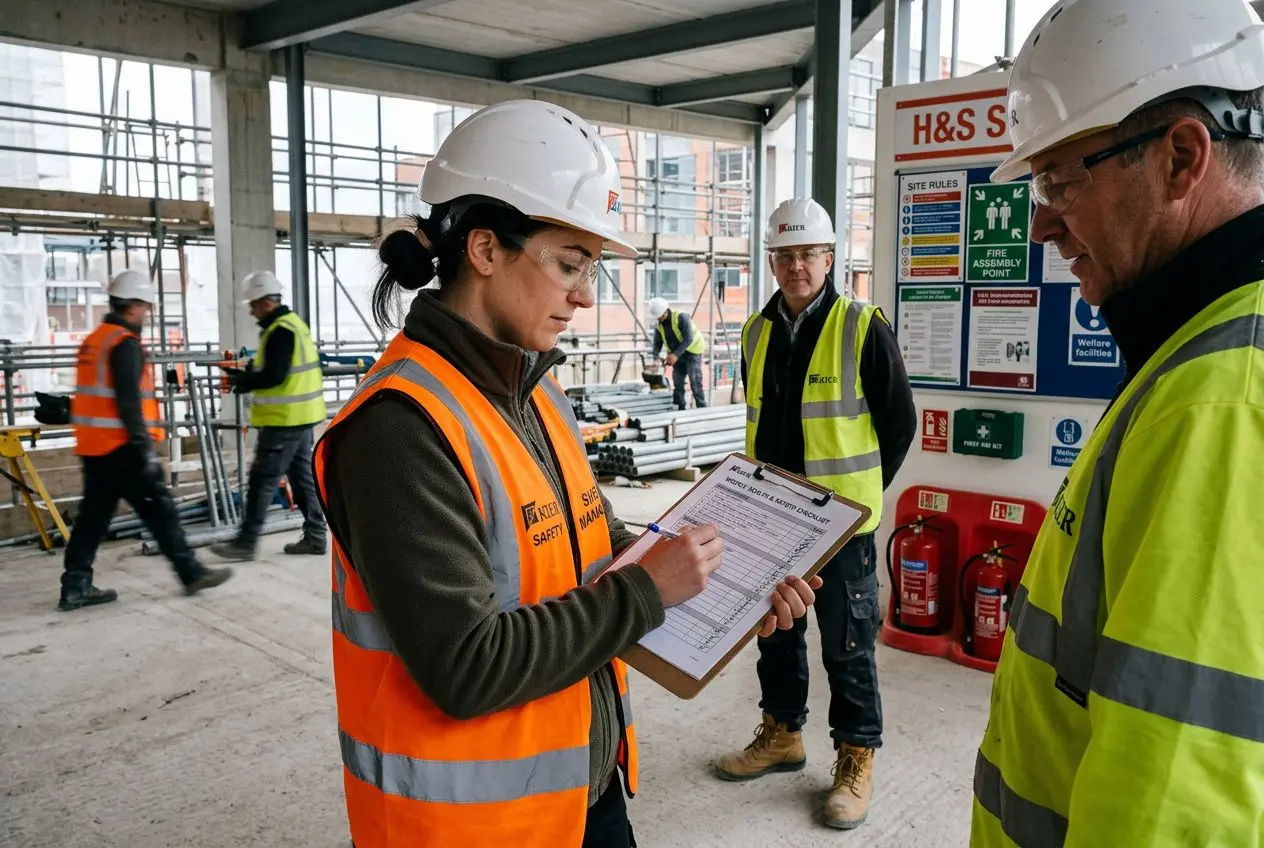
Why UK employers need a structured safety checklist
If you are asking what is a health and safety checklist, the simplest answer is this: it is a working template used to check whether key controls, processes and responsibilities are in place. It helps managers spot workplace hazards, confirm whether arrangements are working, and identify where a further risk assessment or corrective action is needed.
A checklist also supports routine inspections, team conversations and management review.
The HSE offers a practical health and safety checklist for smaller businesses. It covers essentials such as policies, accident reporting, training, consultation and first aid. all employers have health and safety duties, and those with five or more employees must record certain arrangements, including their health and safety policy and significant risk assessment findings.
How checklists support safety compliance standards
Employers need clear evidence that risks have been identified, sensible controls have been introduced and responsibilities are understood. That is why checklists remain useful. They help organisations review whether arrangements meet internal expectations, HSE guidance andinternal standards, HSE guidance and, where relevant, wider frameworks such as ISO 45001.
A good safety checklist creates a record of what has been checked, what is missing and what needs attention. It can support audits, leadership reviews and operational decision-making, especially where several teams, sites or facilities are involved.
Salusphere Global helps organisations use checklist reviews as part of a broader health and safety approach, including audits, competent person support, training and workplace risk assessment activity.
Why a checklist on its own is not enough
It cannot replace judgement, consultation, supervision or a suitable and sufficient risk assessment. If the document says controls are in place but the shop floor, office, warehouse or site tells a different story, the checklist has not done its job.
This matters in organisations managing varied workplace hazards across operations, people, equipment and premises. A review may show that training exists, for example, but it will not always reveal whether staff understand it, whether behaviour is safe in practice or whether the work environment has changed.
That is often where external support adds value. Salusphere Global works with employers that need a clearer view of their current position, whether through a health and safety audit, fractional senior support or help improving existing systems.
Tailoring your checklist to your workplace and facilities
It needs to reflect your organisation, your people, your facilities and the actual risks they face. An office-based checklist will not be enough for manufacturing, logistics, maintenance, education, care or multi-site operations.
The most effective safety checklist is built around the real environment, the tasks being carried out and the controls required. That may include vehicle movement, manual handling, fire precautions, contractor management, battery charging, lone working, welfare arrangements or other sector-specific issues.
Salusphere Global often starts with an audit or review before developing a tailored checklist framework. That makes the document more useful in practice and helps ensure it covers the workplace hazards that matter to your organisation rather than relying on a one-size-fits-all template.
The HSE’s leadership health and safety checklist makes a similar point. Effective health and safety management depends on leadership, review and follow-through, not a one-off exercise.
Using a checklist as part of a wider compliance approach
A sensible safety checklist should sit within a wider system. That includes clear responsibilities, proportionate documentation, regular inspection, staff involvement, suitable training and action tracking. For many smaller organisations, that can be difficult to manage without dedicated expertise.
Some employers use external support to strengthen this work without recruiting a full-time specialist.
If your current checklist feels too generic, out of date or disconnected from daily operations, it may be time to review the wider system around it.
Speak to Salusphere Global about a health and safety audit or competent person review to identify gaps in your current arrangements and prioritise practical action.
Key areas every health and safety inspection checklist should cover
No two workplaces are the same. Even so, most organisations face a common set of risks that should appear in any health and safety inspection checklist. A good inspection checklist helps you review those risks in a consistent, proportionate way, record what you find, and make sure actions are followed through.
A weak or outdated workplace inspection checklist that UK businesses rely on can leave gaps in managing risks, expose people to avoidable harm, and make it harder to show that your organisation is taking a sensible, structured approach to workplace hazards.
Core areas your safety inspection checklist should review
It is not enough to focus only on the issues raised last time. A health and safety inspection needs to check whether controls are current, understood and working in practice across the full working environment.
- Risk assessment Check that a current risk assessment is in place for significant workplace hazards, that findings are recorded, and that control measures are reviewed when tasks, people, layout or equipment change.
- Fire safety Confirm escape routes are clear, fire wardens are trained, extinguishers are correctly located and maintained, and that both the fire risk assessment and fire safety checklist are up to date.
- First aid Make sure first aid arrangements are suitable for the size and nature of the organisation, kits are accessible and stocked, and annual refresher training may be useful and is strongly recommended by HSE, while first-aid at work certificates are valid for three years.
- Incident reporting Review whether accidents and near misses are being reported, recorded and analysed properly so that action can be taken before issues are repeated.
A health and safety inspection checklist should also cover training. That includes fire safety awareness, display screen equipment assessments for regular users, including home workers, and other relevant topics such as manual handling, slips and trips, working at height and hygiene. Training should be current, recorded and delivered in a way that reflects the real risks people face.
Equipment, substances and contractor checks
A strong safety inspection looks beyond the obvious. Equipment, hazardous substances and contractor arrangements are often where practical gaps appear, especially on busy sites where operational pressure can overtake routine checks.
Your safety inspection checklist should confirm that work equipment is maintained, suitable for use and, where needed, properly guarded. Electrical items and systems should be checked for visible damage, safe condition and appropriate inspection records. The standard of checks should reflect the environment and the type of work being carried out.
Where hazardous substances are used, the checklist should confirm that assessments are in place, controls are understood, and staff have the right information, instruction and protective equipment. For contractor work, you should verify competence, site rules, induction arrangements and supporting documents such as insurance details and the contractor’s safety policy before work starts.
| Checklist area | Key verification points | Industry-specific risk level |
| Equipment safety | Maintenance records, guarding, inspection and testing | High in manufacturing and logistics |
| Hazardous substances | Inventories, control measures, protective equipment | High in cleaning, laboratories and construction |
| Contractor control | Insurance, competence, induction records, safety policy | High in facilities and construction |
| Working at height | Planning, supervision, access equipment checks | High in construction and maintenance |
| Workplace facilities | Welfare, ventilation, temperature, housekeeping | Relevant across all sectors |
Contractor oversight is often missed, yet it is a legal requirement and a direct compliance risk. If contractors are working on your premises, your inspection checklist should include clear checks before work starts, while it is taking place and once it has finished. This is particularly important in facilities management, maintenance and other higher-risk activities.
How to document a health and safety inspection properly
A health and safety inspection checklist only adds value if findings are recorded clearly and acted on. Every inspection checklist should capture the date, location, inspector, issues identified, actions required, responsible person and target timescale.
Good records also help you spot patterns. Repeated issues with equipment, poor hygiene standards, gaps in fire safety controls or recurring workplace hazards across more than one site can point to wider weaknesses in systems, training or supervision.
Senior leaders should review findings regularly. If actions remain at local level without management oversight, the process quickly loses value. The aim is not just to complete a health and safety inspection checklist, but to use it to support better decisions, stronger compliance and a safer working environment.
If you want to strengthen your current inspection checklist, review a workplace inspection checklist UK sites are using, or take a more structured approach to managing risks, Salusphere Global can help. We support organisations with health and safety audits, workplace risk assessment reviews, fire safety support and fractional senior advice to help identify gaps, prioritise action and improve systems.
Using a health and safety walk around checklist effectively
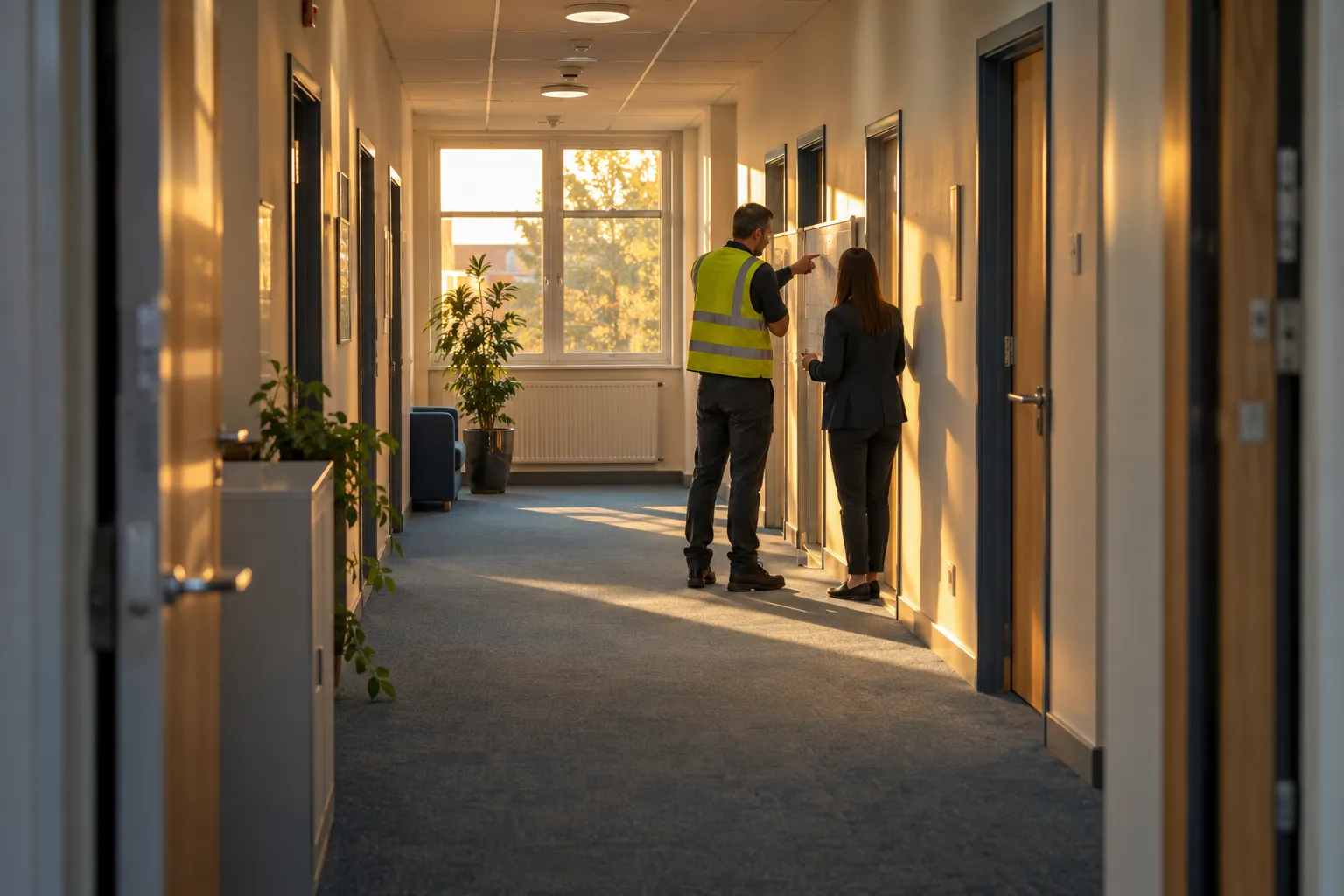
A health and safety walk around checklist is a simple but valuable way to check what is really happening across your workplace. Used properly, it helps managers and safety representatives spot issues early, maintain a safer working environment, and show employees that health and safety matters in day-to-day operations, not just during formal reviews.
How to conduct a practical safety inspection walk around
The most useful walk arounds reflect real working conditions. That means carrying out a safety inspection while work is actually happening, rather than waiting until an area has been cleaned up or prepared in advance. You are far more likely to see how people move, how tasks are being done, and where risk is beginning to build.
A good checklist should prompt you to look at the basics properly. Check floors, walkways, storage areas and access routes. Look closely at equipment condition, housekeeping standards and whether controls are being followed in practice. Speak to employees as you go. Ask what is working, what is difficult and whether anything has changed since the last review. Small comments often reveal larger problems.
If documented systems say one thing but everyday behaviour shows something else, that gap matters. It may point to unclear procedures, poor supervision, unsuitable equipment, training needs or wider operational pressure.
Walk around inspections should be carried out by someone who understands the workplace well enough to recognise hazards and has the authority to escalate concerns. Under the Management of Health and Safety at Work Regulations 1999, employers must have access to competent health and safety assistance. The frequency of checks should increase where risks are higher, or where staffing, activities or the working environment change. Findings should always be recorded clearly so actions can be tracked and reviewed.
When a checklist is not enough and expert advice is needed
A safety inspection can help identify obvious issues, confirm whether basic controls are in place and support routine compliance activity, but it has limits. It cannot, on its own, replace a full health and safety audit or the judgement of a competent professional when risks are more complex.
This becomes particularly important where serious gaps are found, incidents have taken place, or problems keep reappearing despite repeated checks. In those situations, a checklist may tell you what is visible, but not why it is happening. Without that deeper review, organisations can end up with a paper-based approach that looks organised but does little to reduce risk in practice.
Higher-risk sectors such as construction, manufacturing and logistics often need more than a standard walk around process. The same applies to multi-site organisations and employers reviewing arrangements after an incident or significant change. Independent support can help identify underlying weaknesses, prioritise action and strengthen compliance in a proportionate way.
Salusphere Global supports organisations with health and safety audits, workplace risk assessments, competent person support and fractional senior support. We help employers identify gaps, review whether systems are working in practice and prioritise realistic improvements based on operational risk, timescales and budget.
If you want to review your current approach to workplace inspections or need independent support after concerns have been raised, speak to Salusphere Global about a health and safety audit or wider compliance review.
How Salusphere Global can help with a free health and safety audit
A safety checklist can be a useful starting point. It helps teams monitor workplace hazards, track routine checks and keep day-to-day compliance activity visible. But a checklist or template on its own rarely shows whether your health and safety policy, controls and working practices are actually effective across the organisation.
That is where an independent review can help. A fresh assessment often highlights gaps that internal checks miss, especially where documentation looks fine on paper but does not fully reflect what happens in practice across teams, sites or facilities.
What a Salusphere Global compliance review covers
Our introductory audit gives employers a clear view of their current position. We look at what is in place, where the main risks sit and what action makes most sense first.
- Compliance gap analysis We review your health and safety policy arrangements, risk assessment process, existing documentation and safe systems of work against relevant UK legal duties and sector expectations.
- Priority action planning We set out clear recommendations, helping you decide what needs immediate attention, what can be phased and how to approach improvements in a proportionate way.
- Targeted specialist assessments If the review identifies specific concerns, we can support with related work such as fire risk assessments, manual handling assessments, first aid needs assessments or COSHH reviews.
- Ongoing fractional support If you need continued input, we can provide flexible competent person support without the cost of a full-time senior hire.
We support SMEs, multi-site organisations, HR teams, operations leaders and facilities managers in a wide range of sectors. We help organisations identify gaps, strengthen systems, manage workplace hazards more effectively and improve compliance in a way that is realistic and sustainable.
Take the next step beyond a template safety checklist
If your current approach depends mainly on a template, a periodic inspection and a basic risk assessment, it may be time for a broader review. A well-run audit can show whether your arrangements are suitable, understood by staff and working as intended before problems escalate.
Speak to Salusphere Global about a free introductory health and safety audit if you want a clearer picture of your current position and practical guidance on what to do next.
Frequently asked questions
What should a UK health and safety checklist include?
A practical health and safety checklist should cover the basics clearly and in a way people can actually use. That usually includes risk assessments, fire safety arrangements, first aid provision, accident and near-miss reporting, training records, workplace inspections, slips and trips, manual handling, COSHH, equipment checks, contractor control, welfare facilities and follow-up actions. It should also link back to the organisation’s health and safety policy, so responsibilities are clear.
Good checklists leave space to record findings, assign actions, name responsible people and set realistic deadlines. They should reflect the actual environment, work activities and risk profile of the organisation, rather than being copied from a generic template.
Is a health and safety checklist a legal requirement in the UK?
No. UK law does not specifically require employers to use a health and safety checklist. However, employers do have legal duties under the Health and Safety at Work etc. Act 1974 and the Management of Health and Safety at Work Regulations 1999. These include carrying out a risk assessment, maintaining a written health and safety policy where required, appointing competent support and consulting employees on relevant health and safety matters.
In practice, a checklist is often one of the simplest ways to show a consistent approach to compliance. It helps organisations track checks across equipment, facilities, fire safety and day-to-day controls, while creating a clear record of what has been reviewed and what still needs attention.
When should a checklist be replaced by a full health and safety audit?
If risks are more complex, repeated issues keep appearing, or a serious incident has taken place, a fuller review is usually the better option. The same applies where an organisation operates across several sites, works in higher-risk sectors or needs stronger assurance around compliance.
A formal audit looks beyond a simple safety checklist. It reviews systems, documentation, responsibilities, control measures and whether the health and safety policy is working in practice across the working environment. This gives employers a clearer picture of gaps, priorities and next steps. Salusphere Global can help organisations decide when a checklist is enough, when a broader review is needed and how to strengthen their approach through audits, competent person support and practical action planning.